
How to Compare Educational Toy Stores in UAE Based on Learning Resources?

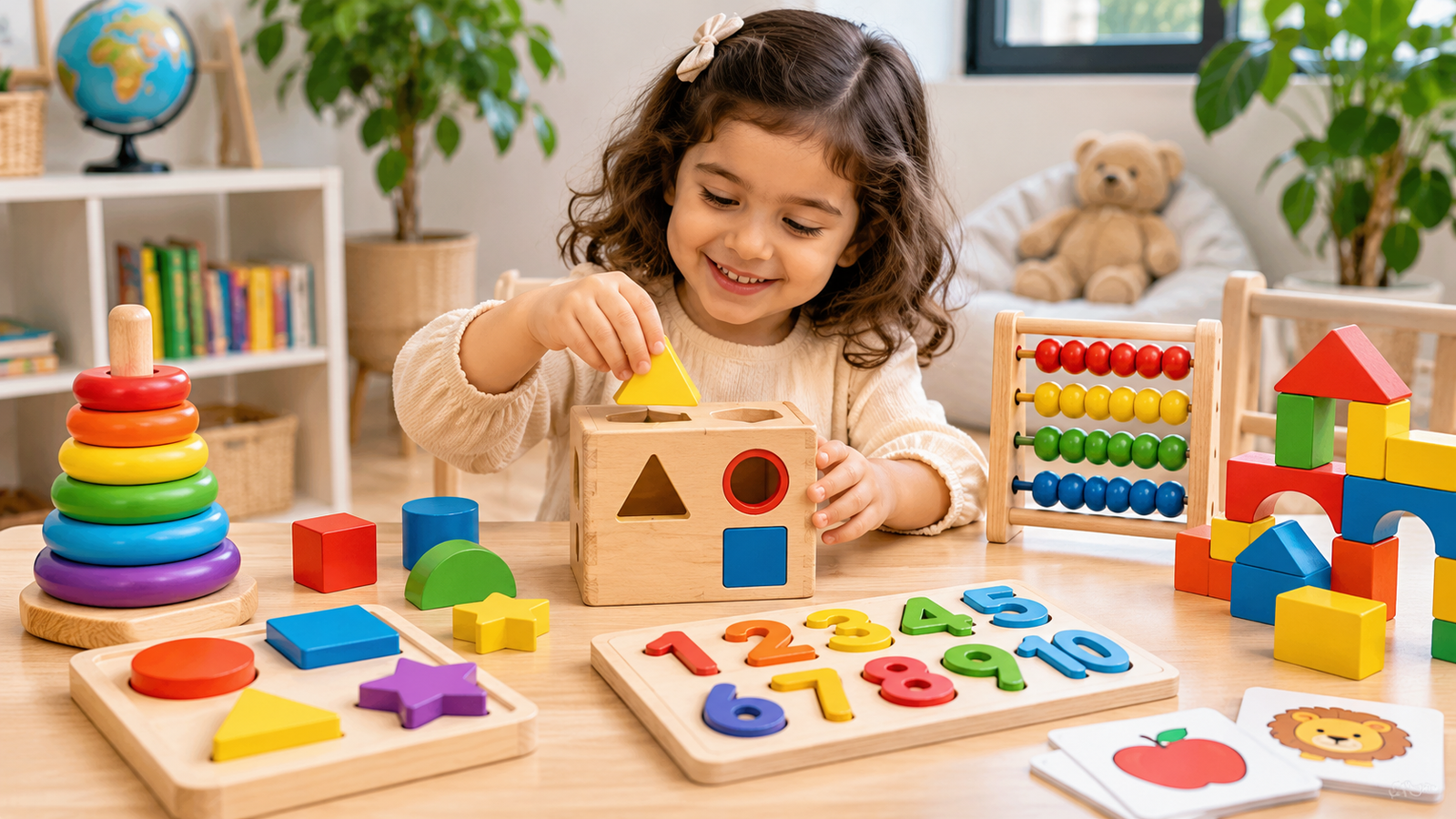
Choosing the right Educational Toy Store UAE involves more than comparing toy prices or browsing colourful product collections. Parents should consider the quality of learning resources, age suitability, developmental benefits, safety information and educational variety available at each store.
Educational toys can support problem-solving, creativity, communication and motor coordination through meaningful play. However, different stores offer different types of learning materials, making it important to understand what each collection provides.
For families in the UAE, comparing educational toy stores based on their learning resources can help identify suitable products that match children’s interests, abilities and developmental needs.
Why Should Parents Compare Educational Toy Stores Based on Learning Resources?
Comparing educational toy stores helps parents identify collections that offer meaningful learning opportunities rather than products designed primarily for entertainment.
A reliable educational toy store should make it easier to understand how different toys can be used during everyday play.
Important factors include:
- Variety of educational resources
- Age-appropriate toy collections
- Developmental learning opportunities
- Product safety information
- Quality and versatility of materials
- Clear product descriptions
- Customer support and purchasing guidance
A store offering several types of learning resources can help families choose activities suited to different interests and abilities.
What Learning Resources Should an Educational Toy Store UAE Offer?
A well-rounded educational toy collection should include materials supporting different areas of childhood development.
Cognitive Learning Resources – Puzzles and Problem-Solving Toys
Cognitive learning toys encourage children to observe, compare, remember and experiment with solutions.
Suitable resources include:
- Jigsaw puzzles
- Shape-matching games
- Sorting activities
- Memory cards
- Logic puzzles
For example, completing a matching puzzle provides opportunities to practise observation, concentration and problem-solving.
Parents can explore educational toys and learning resources when comparing different activities for their children.
Sensory Learning Resources – Exploring Textures and Movement
Sensory toys provide opportunities for children to investigate textures, shapes, sounds and movement.
Common options include:
- Textured activity boards
- Sensory exploration toys
- Tactile matching games
- Manipulative toys
- Age-appropriate sensory kits
These materials may encourage sensory exploration, coordination and curiosity.
Parents should consider individual sensory preferences and review product safety recommendations before choosing activities.
Creative Learning Resources – Building and Imaginative Play
Creative toys encourage children to develop their own ideas and explore different possibilities.
Examples include:
- Building blocks
- Construction sets
- Art and craft materials
- Pretend-play toys
- Creative activity kits
The National Association for the Education of Young Children (NAEYC) highlights the value of varied play materials, including blocks, puzzles, art supplies and imaginative-play toys.
Stores offering open-ended materials can provide more opportunities for flexible and creative play.
How to Compare Educational Toy Stores by Developmental Benefits
Different educational toy categories provide opportunities to practise different developmental skills.
Parents can use the following comparison when reviewing learning resources.
| Learning Resource | Skills Children Can Practise | Suitable Activities |
|---|---|---|
| Puzzles and matching games | Observation, problem-solving | Matching and sequencing |
| Building and construction toys | Coordination, spatial reasoning | Creating structures |
| Sensory play materials | Sensory exploration, attention | Touching and sorting |
| Storytelling resources | Language, imagination | Creating stories |
| Creative activity kits | Planning, creativity | Designing and making |
A useful educational toy collection should provide variety rather than focusing exclusively on one developmental area.
Children may practise several skills through a single activity depending on how they use the materials.
Comparing Educational Toy Collections for Different Age Groups
Age-appropriate learning resources are essential because children’s abilities and interests change as they develop.
Ages 1–2: Early Exploration and Coordination
Toddlers often enjoy activities involving movement, stacking and simple object manipulation.
Suitable resources include:
- Large stacking blocks
- Simple shape sorters
- Soft activity toys
- Large-piece sorting materials
Choose toys without accessible small parts and follow manufacturer age recommendations.
Ages 3–5: Early Learning and Imaginative Activities
Preschool children may benefit from activities encouraging language, creativity and simple problem-solving.
Useful resources include:
- Pretend-play sets
- Beginner puzzles
- Colour-matching games
- Building blocks
- Art materials
These activities provide opportunities to explore new ideas while interacting with caregivers.
Ages 6 and Above: Reasoning and Creative Challenges
School-age children may enjoy more complex activities requiring planning and experimentation.
Consider:
- Construction kits
- Strategy games
- Logic puzzles
- Creative projects
- Educational activity sets
Parents comparing learning toys for kids in the UAE should consider developmental abilities alongside age recommendations.
How Can Parents Evaluate the Quality of Learning Resources?
The quality of educational resources depends on their safety, suitability, durability and usefulness during play.
Check Educational Value Beyond Product Labels
Not every toy advertised as educational provides meaningful learning opportunities.
Ask whether the activity encourages children to:
- Explore independently
- Solve manageable problems
- Make decisions
- Communicate ideas
- Experiment creatively
Choose products with clear play possibilities rather than relying entirely on marketing descriptions.
Review Safety and Product Information
Safety should remain a priority when comparing educational toy stores.
The American Academy of Pediatrics’ toy safety guidance recommends checking age guidance, warning labels and potential hazards.
Parents should pay particular attention to:
- Small components
- Loose magnets
- Accessible batteries
- Sharp edges
- Product materials
- Appropriate adult supervision
Consider Versatility and Long-Term Use
Some educational toys can be used in several ways as children develop new skills.
For example, building blocks may initially support stacking activities before becoming materials for more complex constructions.
Versatile learning resources can provide opportunities for repeated and varied play.
What Online Shopping Features Should Parents Compare?
Online educational toy stores should provide clear information that helps families make informed purchasing decisions.
Before ordering, review:
- Product descriptions: Are materials, dimensions and included components explained?
- Age guidance: Are recommended ages clearly stated?
- Product images: Do photographs accurately show the learning materials?
- Delivery information: Are shipping charges and delivery conditions available?
- Return policies: Are the terms clearly explained?
- Customer support: Can parents ask questions before purchasing?
These details help parents compare shopping experiences alongside educational value.
A convenient online store should make important information easy to find.
Common Mistakes When Comparing Educational Toy Stores
Parents can make better decisions by avoiding comparisons based only on appearance, popularity or price.
Common mistakes include:
- Choosing stores solely because they offer discounts.
- Assuming expensive toys provide better educational value.
- Ignoring manufacturer age recommendations.
- Purchasing several toys that encourage identical activities.
- Overlooking product safety information.
- Selecting complicated toys that exceed a child’s current abilities.
Instead, compare the overall learning experience each resource can provide.
Families can browse Pebblez Toy Store to explore educational, sensory and developmental play options before deciding which activities suit their needs.
Pebblez – Helping UAE Families Explore Educational Learning Resources
Pebblez Toy Store offers educational, sensory and developmental play resources for children, families and professionals in the UAE. Its online collections include different learning materials for hands-on activities, creative exploration and skill-building play. Parents can review individual product descriptions and age guidance when comparing suitable options. Clear information and thoughtful selection can help families make more confident educational toy purchases.
Looking for an Educational Toy Store That Supports Meaningful Learning?
Choosing an Educational Toy Store UAE becomes easier when parents compare learning resources, safety information, developmental suitability and practical play value. Explore educational and developmental toys at Pebblez Toy Store and discover engaging resources that encourage curiosity, creativity and enjoyable learning experiences for children.
Frequently Asked Questions
1. How can parents compare educational toy stores in UAE?
Compare the variety of learning resources, recommended ages, product safety information and educational activities available. Also review delivery conditions, product descriptions and customer support.
2. What learning resources should a good educational toy store offer?
A useful collection should include puzzles, building toys, sensory materials, creative activities and language-learning resources. Variety helps parents select toys suited to different interests and abilities.
3. Are expensive educational toys better for children’s development?
Not necessarily. Affordable puzzles, building blocks and creative materials can offer meaningful learning opportunities when used appropriately.
4. How do I know whether an educational toy is age-appropriate?
Check the manufacturer’s recommended age, safety warnings and activity requirements. Consider your child’s developmental abilities and interests before purchasing.
5. Why are open-ended learning toys useful for children?
Open-ended toys allow children to create different activities without following one fixed outcome. Building blocks, art materials and pretend-play toys provide opportunities for creativity and problem-solving.
6. What should parents check before buying educational toys online in UAE?
Review product descriptions, age recommendations, safety information, delivery terms and return policies. Choose stores that provide clear details and accessible customer support.
